TPO Roofing in Grapevine, TX
Two TPO bids can describe the same welded single sheet and still not be the same roof. The insulation underneath varies.
TPO roofing in Grapevine, TX
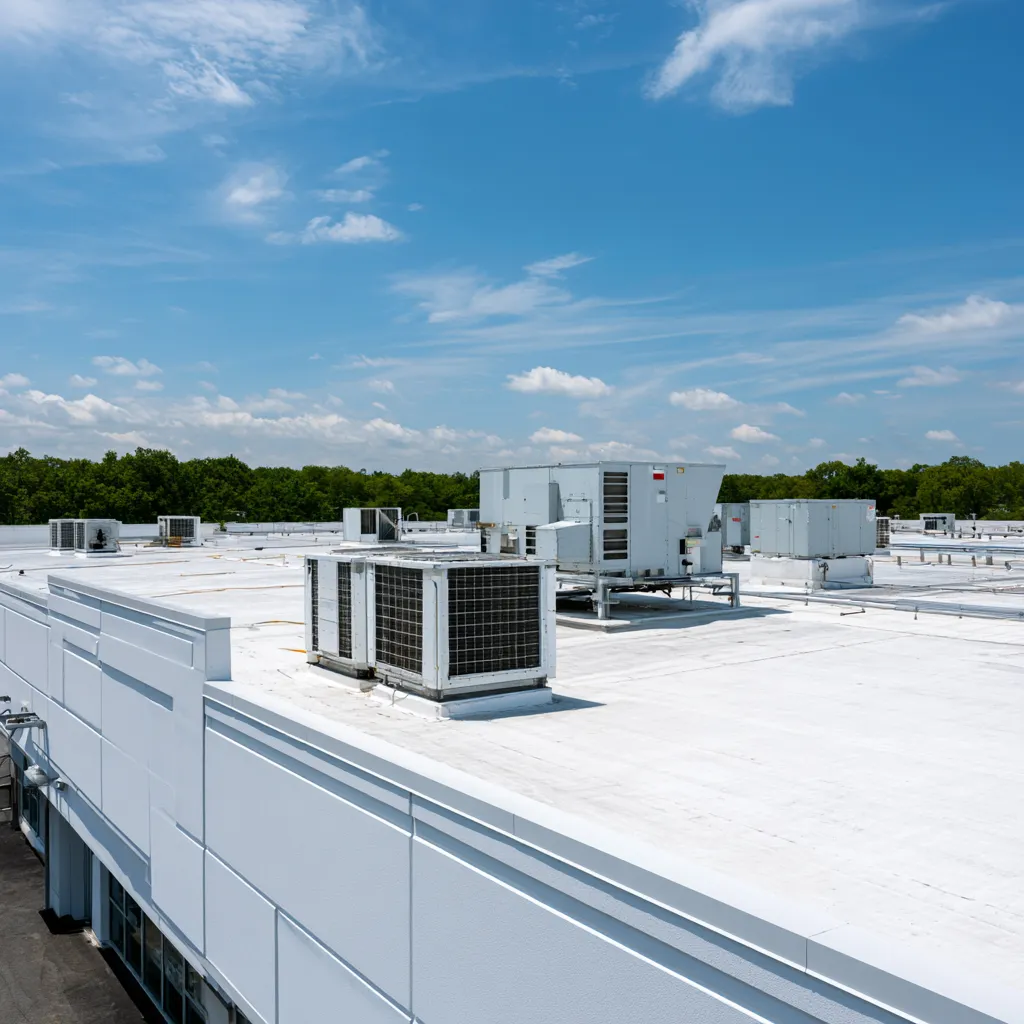
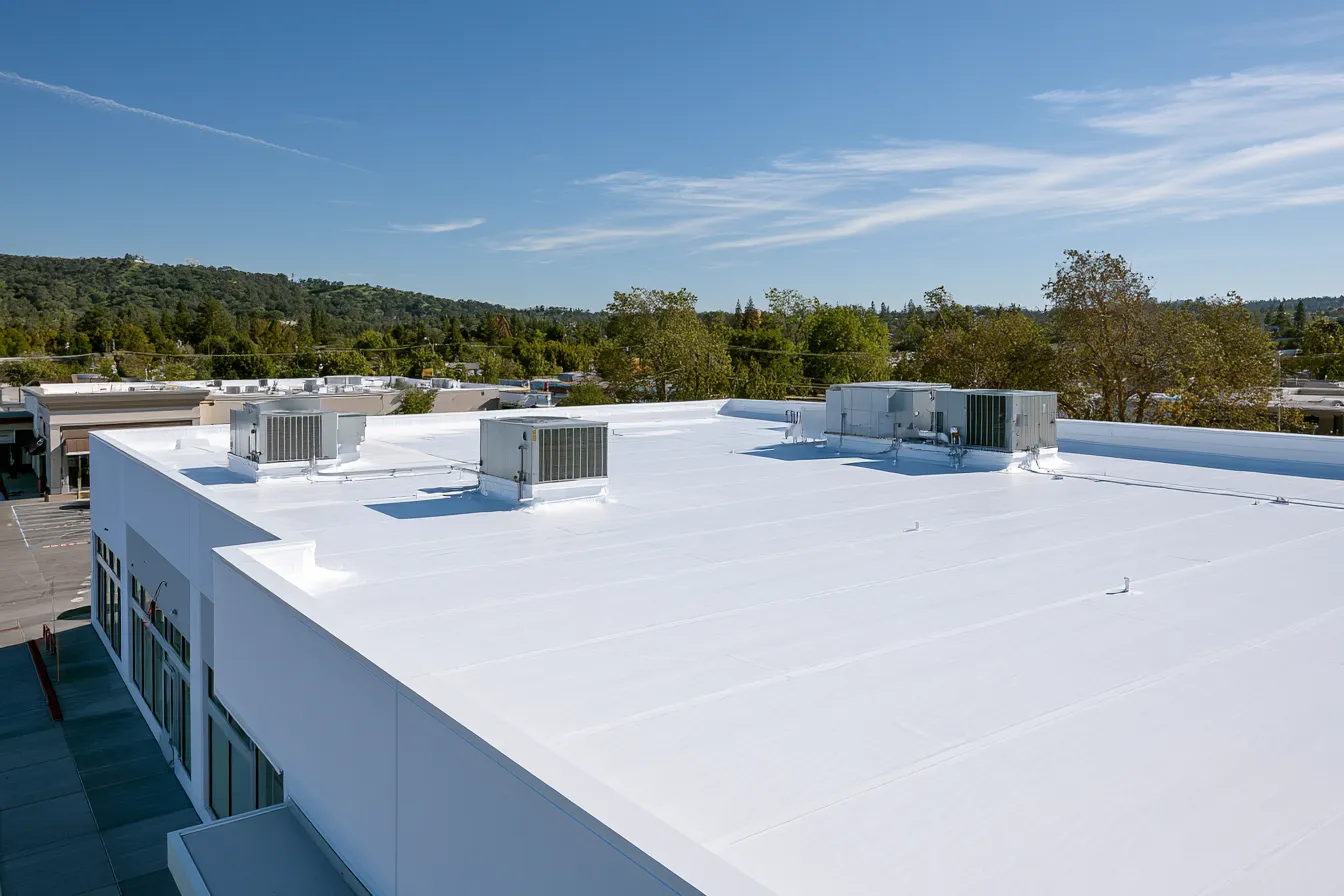
TPO is a single ply membrane, which means the waterproofing is one flexible plastic sheet instead of layers of asphalt. It arrives in rolls, gets laid across the roof, and every overlap is welded with hot air until the two sheets are one piece.
White reflects, and in July that is worth something. It is not armor. A dropped tool or a route walked all year will cut a membrane, so a roof that gets serviced wants walk pads and a thicker sheet. Where TPO sits against the other commercial systems is laid out in commercial roofing in Grapevine.
What a TPO roof installation includes
These are the lines that decide a membrane price. A bid that skips one is not cheaper, only vaguer.
Ask which of these a bid actually includes. The cheaper of two membrane prices has usually assumed less insulation, a thinner sheet, or that the drainage is somebody else's problem.
Tear-off or recover
Either the old roof comes off to the deck, the structural surface underneath, or the new sheet goes over it. From the parking lot, a tear-off shows up as loaded dumpsters and a crew working the perimeter all day; a recover job barely changes what's visible from the ground at all.
Insulation and a cover board
Rigid boards go over the deck and a harder board goes over those. The soft insulation handles temperature and the hard board handles impact.
Tapered fill toward the drains
Wedge shaped insulation is built up across the flat areas so water runs to an outlet. The flat spots that used to pond after every storm drain down on their own once the taper is in place.
Screwed down or glued down
The membrane is either fastened through the insulation on a set pattern or adhered across its whole face. A rushed job picks whichever method is faster and skips checking what the deck or the wind exposure actually calls for.
Welded seams, then probed
Every overlap is heat welded and then walked with a blunt hook run along its edge. Every seam gets this treatment on a new roof; on a coating or a patch, only the seams the work actually touches get probed.
Penetrations and edge metal
Every penetration, meaning any pipe, drain or equipment curb that comes up through the roof, gets its flashing built by hand. Skip that step and wind gets a lip to work under at the edge, or a curb starts leaking into the space below, long before the membrane itself gives out.
What tells a building owner the membrane is failing
Most of these turn up on a slow walk of the roof. What they mean is still a roofer's call.
- Seam edges that lift when you run a fingernail along them.
- A chalky surface that leaves powder on your hand.
- Rows of small dimples across the open middle of the roof, evenly spaced.
- Scuffs and gouges along the walking line between the roof hatch and the units.
- Flashing at inside corners that looks stretched, or that bridges the angle instead of sitting down.
- Bare cut edges at drains and pipes where the sealant has gone.
One failed detail is a repair and six of them is a replacement argument, and an owner wants that distinction before the first bid arrives.
How a TPO roofing job runs on an occupied building
Tenants stay in the building through all of it. Four stages, and no section is left open at night.
Survey and a test core
A small plug comes out. Wet insulation under it changes everything.
The system priced line by line
Insulation, cover board, thickness, attachment and every detail, each priced separately.
Work moves section by section
Deliveries, the dumpster and the loud hours get agreed before anything opens.
Inspection, then the paperwork
The finished system is inspected before any manufacturer coverage exists.
What the roofer documents on a membrane job
Once the last sheet is down, almost none of this is visible again. So it gets recorded.
The deck, while it was open
Photographs of the decking and the insulation at the test core, dated. What was found under the old roof is the reason the estimate reads the way it does.
The attachment that actually went down
Fastened or adhered, the pattern used, and the thickness of the sheet, all recorded as the roof goes on. Six months later nobody can tell any of that from the surface.
The seams, checked by hand
Welds are probed along their length, and one that opens is cut back and rewelded while the roof is still open. It is the one test that costs nothing and catches the seam a storm would have found.
What drives a TPO roof price in Grapevine
Area sets the base, and what goes under the sheet moves it from there. Insulation depth, tapered fill where the drainage needs fixing, the sheet thickness you specify and whether it is screwed or glued all carry their own price. Then count what comes up through the roof, because every pipe, drain and curb is built by hand rather than rolled out.
Ask what your roof needs- How much roof there is, and how much of it is being replaced
- Sheet thickness, since thicker takes punctures and sun better
- Screwed down or fully glued, and what the deck will take
- Insulation depth, plus tapered fill where water still stands
- How many pipes, drains and curbs there are to flash by hand
No published range prices a membrane roof, because the variable is under the sheet. Ask for the figure with the assumptions listed beside it.
TPO questions Grapevine building owners ask
Most of these arrive with a bid already on the desk. The comparison question settles the rest.
Get a Grapevine TPO roof measured
Grapevine Roofworks needs three things: the address, roughly how old the roof is, and whether a bid is already on the desk. A commercial roofer measures it and cuts a core before quoting, so what comes back names the insulation, the attachment and the sheet thickness instead of a lump sum.
Call today(817) 442-2362