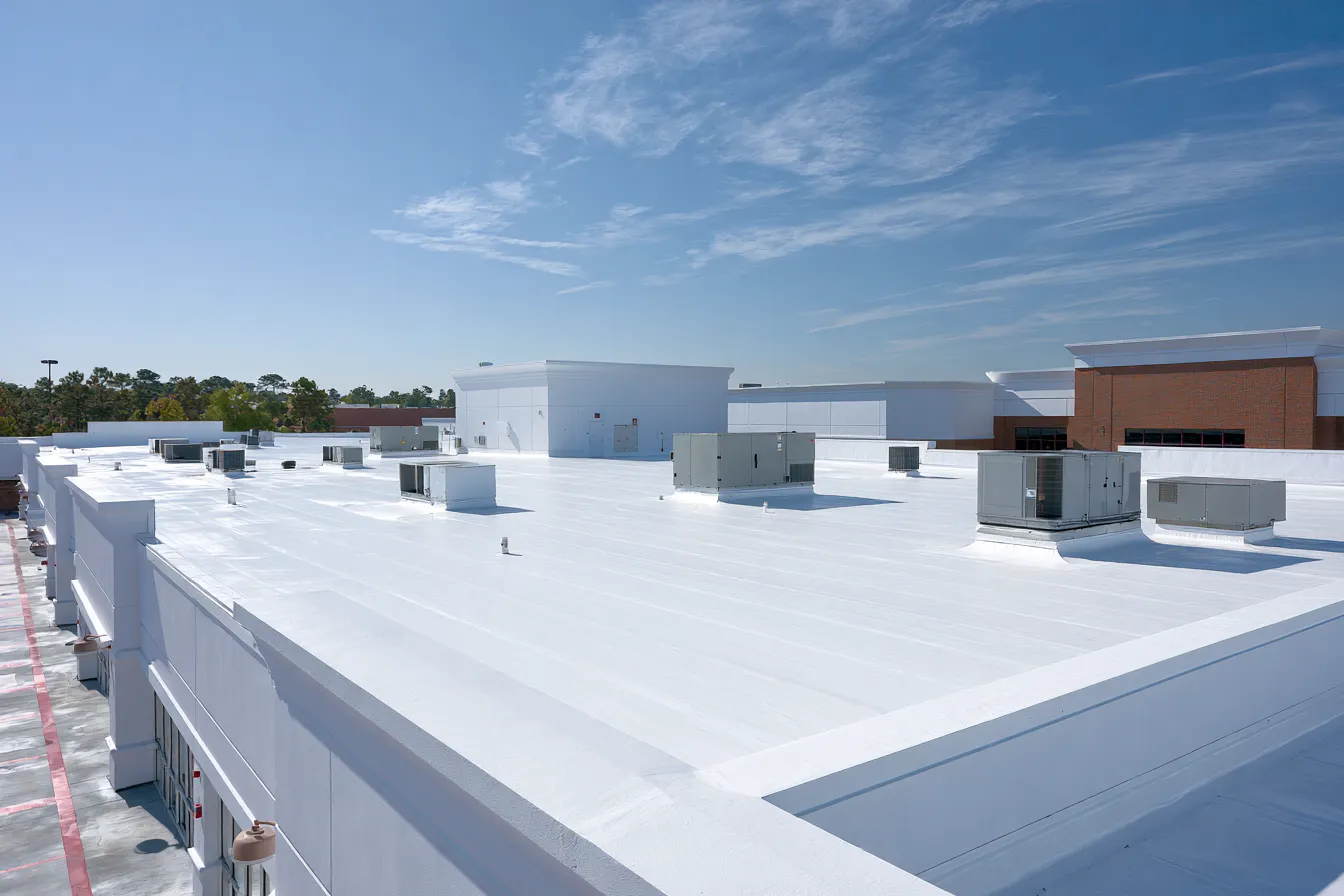
Flat Roof Repair in Grapevine, TX
Where is the water actually getting in when a flat roof shows it somewhere else inside?
Flat and low-slope roof repair in Grapevine, TX
A flat roof is not actually flat. It is built with just enough slope to move water off itself, and almost every failure on one starts where that stopped happening. The open middle of the roof, away from all the details, is the last place to look.
Repair, a recover that lays a new membrane over the old one, or a full replacement: it is really one decision, and how much of the insulation is wet is what settles it. Where the whole roof is the question rather than one detail, commercial roofing in Grapevine covers the systems.

What flat roof repair covers
Repair means rebuilding the detail that failed. These are the parts an estimate has to account for.
A repair estimate should say what area it covers and where it stops. That boundary is what makes it a repair rather than a visit that keeps going.
Finding the wet insulation
The insulation is checked for trapped water by probe, by core cut or with a meter run across a grid. None of it shows from the parking lot.
Drains, scuppers and low spots
Outlets get cleared and the backup route is checked, whether that is a second drain or a scupper, the opening through the edge wall that lets water escape when the drain blocks. A single clear drain still fails the roof if the backup route is blocked too.
Open seams and base flashing
Split seams are cut back and rejoined in kind. That wall-to-roof line stops being the recurring leak point it was.
Curbs and pipe collars
Everything that comes up through the roof gets its flashing stripped back and rebuilt rather than smeared with sealant. Smearing sealant over a failed curb instead is faster.
Wet material out, dry material in
Where the survey found water, that section comes out to the deck, the structural surface underneath. Sections the survey read as dry stay untouched.
A water test before anybody leaves
The repaired area is flooded or run with a hose and watched from the ceiling below. Without that test, the first proof the repair worked, or didn't, is a stain on the ceiling below, found only after the crew has gone.
Where a flat roof usually starts failing
The question on a flat roof is where to look. These six places, roughly in the order they fail.
- At the drains. The ring of roof around an outlet is where debris collects and water sits longest.
- At the scuppers and the roof edge.
- Around the equipment curbs. Flashing has to turn a corner on the raised frames under rooftop units.
- At the pipes and conduits. The collars sealing vents, gas lines and electrical runs are the shortest lived detail up there and go well before the membrane around them.
- Where the roof meets a wall.
- Out in the open middle. Blisters.
Check the one above the stain, then check the other five anyway.
How flat roof repair runs on a working building
Nobody opens the roof before the water has been located. The building keeps trading through all four stages.
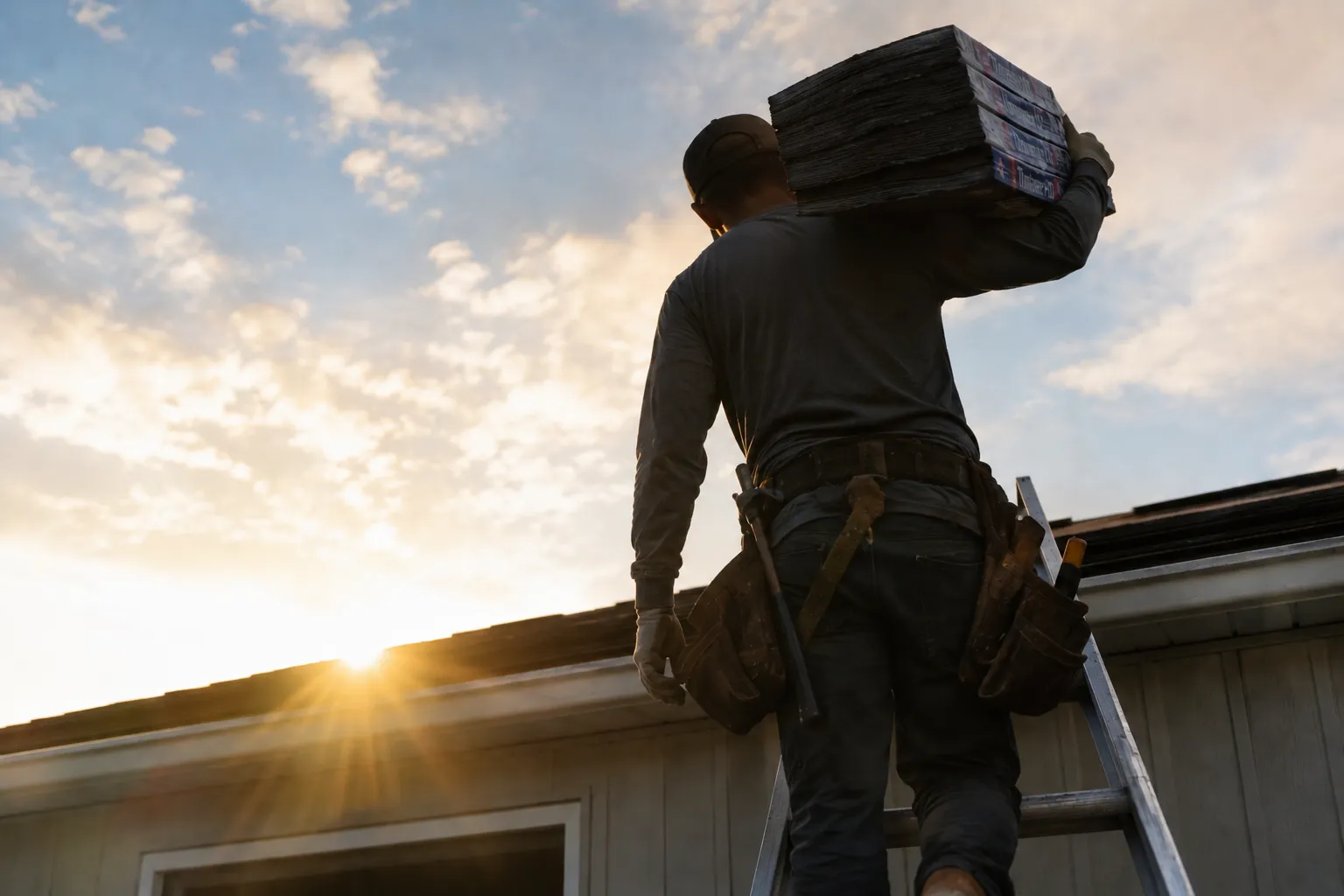
Walk it and mark the wet
Probe, core or meter, and the output is a marked plan.
Price the repair, not the roof
Patch, section replacement or recover, priced against what the survey found.
Rebuild the detail that failed
Wet board out, the seam or flashing rebuilt, dry board back in.
Test it, then hand it over
Water on the repair, watched from below, then the photographs.
What the roofer documents before a flat roof repair
On a flat roof the survey is the diagnosis. Everything the price says rests on it.
The wet area, drawn on a plan
The survey comes back as a marked plan of the roof with the saturated sections outlined on it. That outline is what the repair gets priced against, and what a second opinion can be checked against.
The detail letting water in
The failing detail gets photographed up on the roof, and the stain gets photographed from inside on the same visit. The two pictures rarely sit above each other on a low-slope roof, which is worth seeing for yourself.
Whether the roof can drain at all
Which outlets run, whether a backup route exists and whether it has ever been used, all noted. A repair on a roof that cannot drain will be back, and an owner should hear that before spending on it.
What drives a flat roof repair price in Grapevine
A repair is priced by how far the water traveled and how many details failed. A split seam on a dry roof is small and contained. The same split over insulation that has been wet through two winters means opening the roof, carrying saturated board off it and bringing dry board back, and nobody knows how much of that there is until somebody probes it.
Ask for a repair estimate- The size of the wet area, which only a probe settles
- Patch, section replacement, or a recover over the whole roof
- How many details failed, and how far each one went
- Getting material up there: hatch, ladder, hoist or crane
- Whether the drainage has to be corrected as part of it
Two flat roofs the same size can price a long way apart, and the difference is under the surface rather than on it. On a real estimate the wet area is drawn and the repair is priced line by line beside it.
Flat roof questions Grapevine building owners ask
These mostly turn up after a leak. The downtown ones turn up before anybody has one.
Get a Grapevine flat roof looked at
Start with the symptom: a stain over one tenant, water standing after every rain, or a patch that has already been done twice. A commercial roofer walks it, maps what is wet, and comes back with a scope that says where the repair stops.
Call today(817) 442-2362