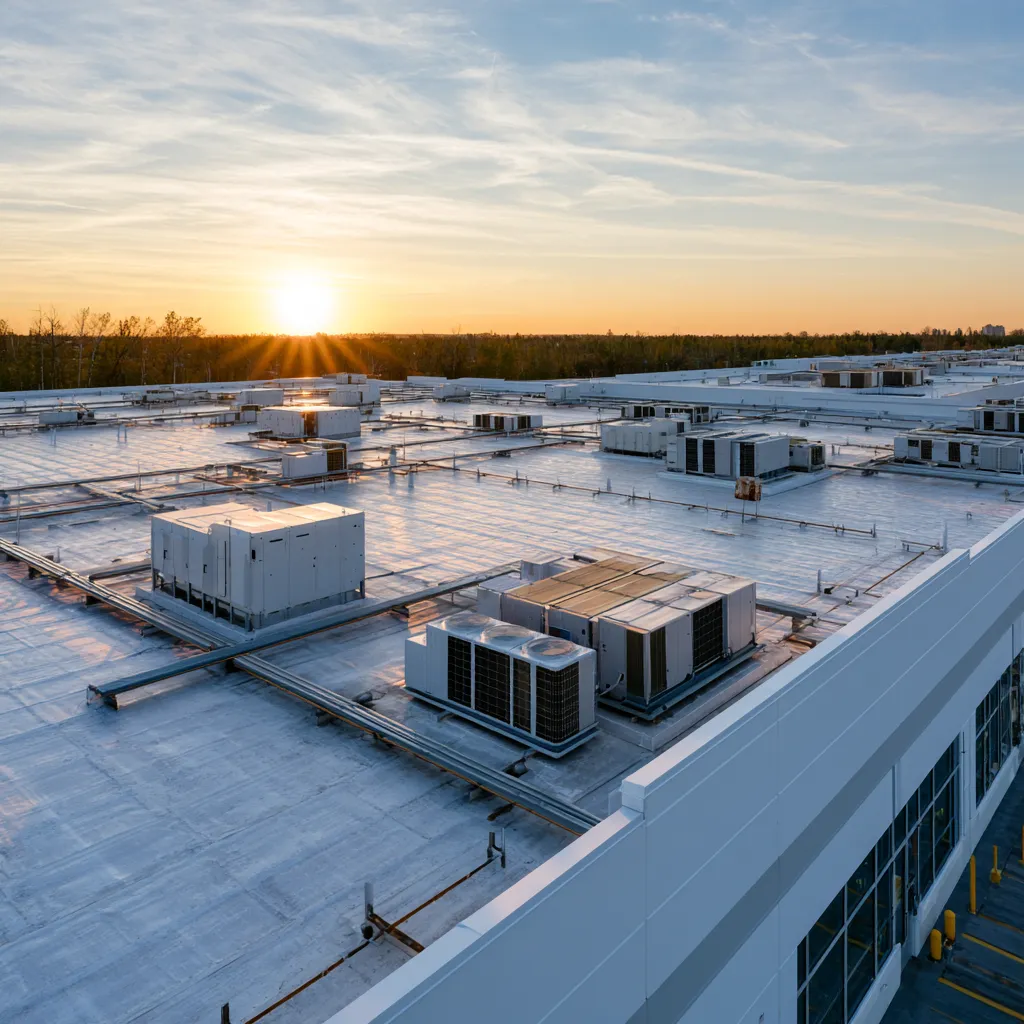
Commercial Roofing in Grapevine, TX
Flat and low-slope roofing for buildings around Grapevine. A commercial roof survey covers the membrane, the drains and what is trapped under the insulation, and the scope comes back itemized so it can sit beside any other bid.
Commercial roofing in Grapevine, TX
Commercial roofing means low-slope work, and low-slope roofs do not use shingles. The deck is the structural surface underneath. Insulation sits on top of it. Over that goes either a single-ply membrane, one flexible sheet seamed into a watertight skin, or a built-up asphalt system laid in layers.
Which one belongs on a building depends on how it drains, how much equipment punches through the roof, and whether anyone walks it to service that equipment. TPO membrane, flat roof repair and restoration coatings each have a page of their own.
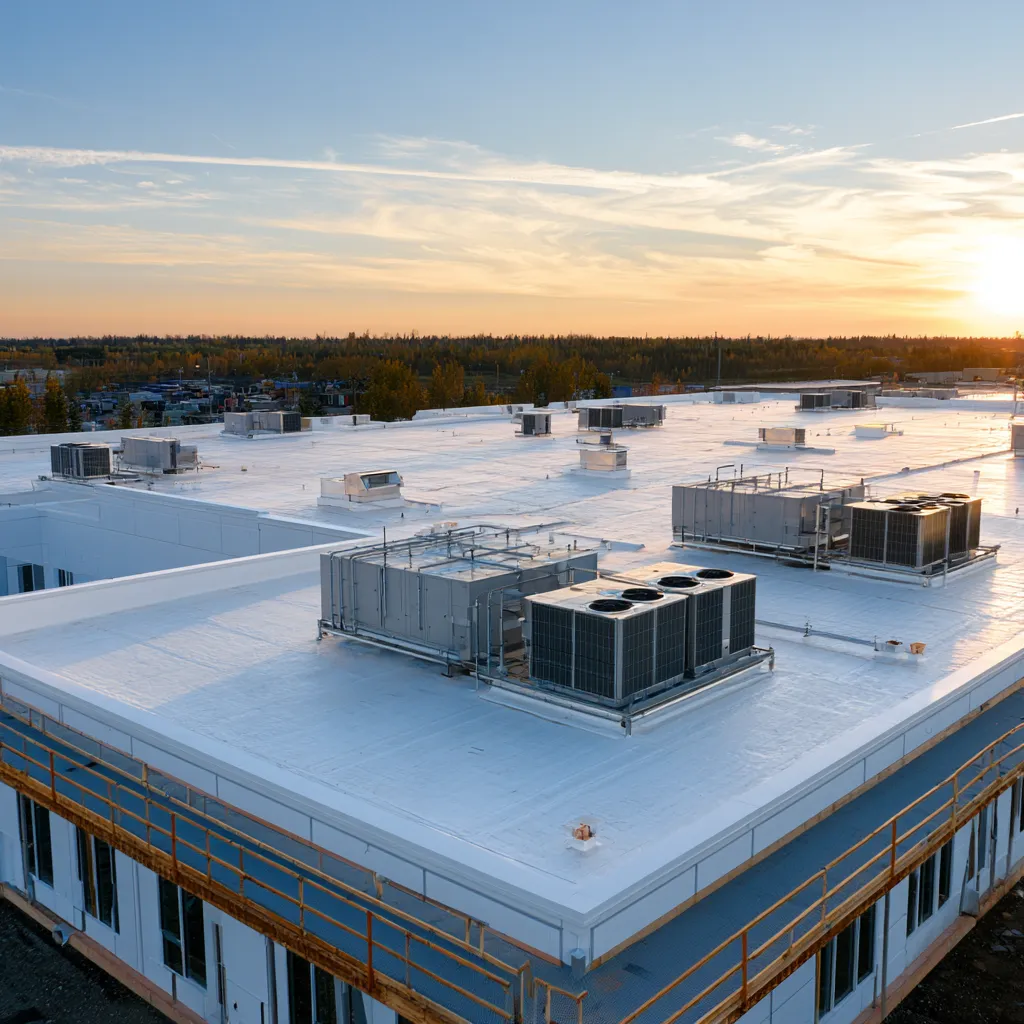
What commercial roofing covers in Grapevine
Two bids stop matching at the line items rather than at the bottom line, and the line items are where the money actually sits.
Anything left off a bid tends to come back later as a change order, at a worse moment and at a worse price.
Survey and moisture check
A commercial roofer walks the roof, photographs it, and probes the insulation for trapped water. That is what settles tear-off against recover.
Tear-off or recover
A recover lays a new membrane over the existing one. Code stops allowing it once the roof carries two layers or the insulation is wet.
Deck repair and fastening
The roofer swaps out soft or corroded decking while the roof is open.
Insulation and slope
The roofer builds up tapered insulation so water runs to the drains instead of standing in the low spots.
Drains and overflow
The roofer clears the primary drains and checks the backup route, whether that is a second drain or a scupper through the edge wall.
Flashings and curbs
A curb is the raised frame a rooftop unit sits on, and the roofer seals every one of them, along with every pipe and vent, back into the membrane.
How to tell a commercial roof is failing
All of these are visible from the roof, and none of them settles anything by itself.
- Seams lifting, curling or splitting along the joins between membrane sheets.
- Water still standing days after rain.
- The membrane pulling back from the parapet, or the metal along that wall working loose.
- Soft or spongy footing, which is usually water sitting inside the insulation rather than on top of it.
- Blisters in the surface where air or moisture has been trapped under the sheet.
- Debris ringing the drains, or an overflow that has never once run.
Any one of them is worth a repair conversation before it becomes a capital one.
How the job runs on an occupied building
A survey comes first and the paperwork comes last. In between sit the price and the work, and the roofer sequences both around how the building runs.
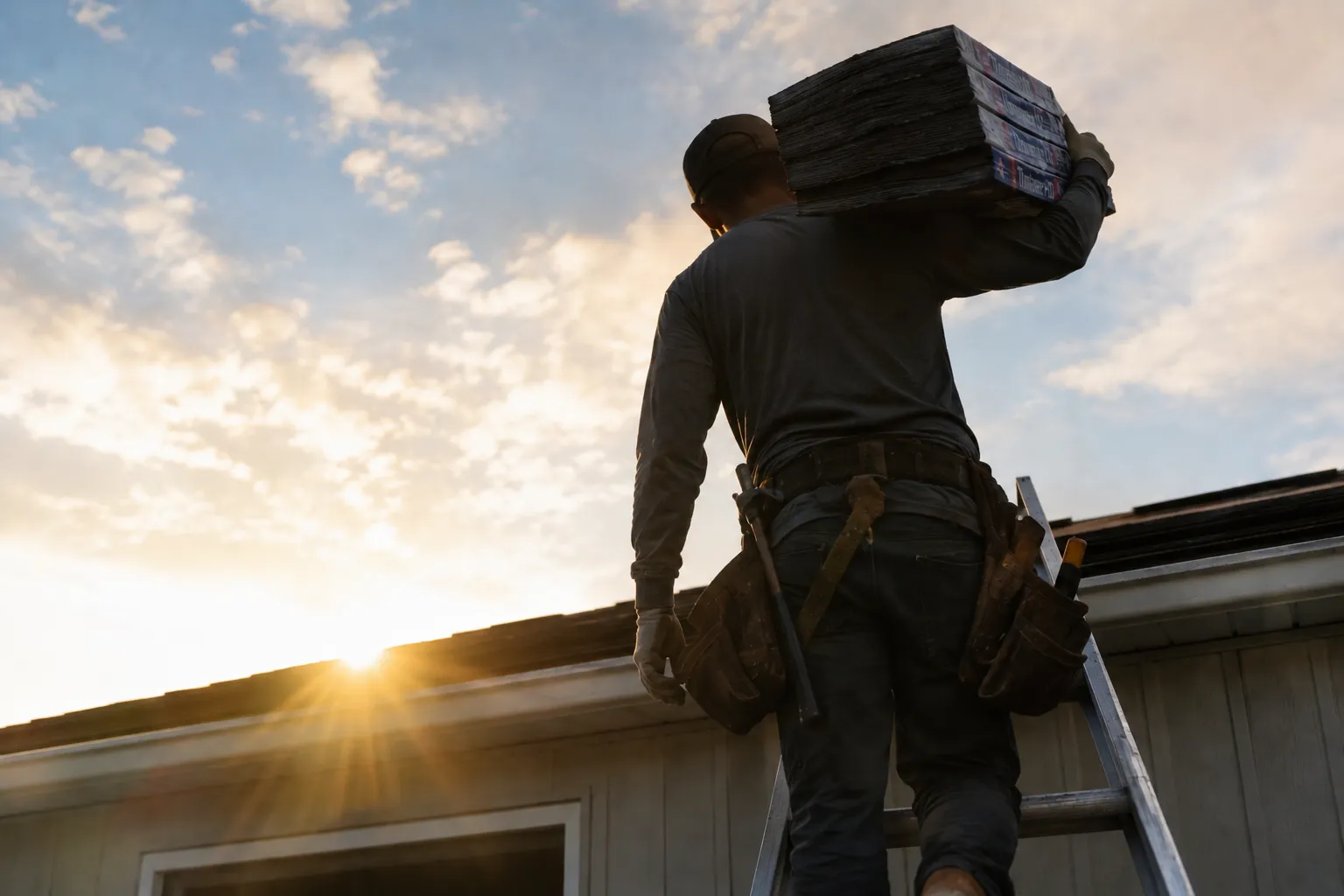
Survey the roof
A roofer walks the roof, photographs seams and drains, and probes for wet insulation.
The number, line by line
What the job covers, what it excludes, and what a soft deck changes.
Work around the building
Staging is what keeps an occupied building working, and a roofer worth hiring will walk that sequence with the owner before anything opens.
Close out
Final photographs, the manufacturer paperwork the system warranty needs, and the workmanship terms.
What you get in writing
A building owner has to defend the decision months later, when a lender or a board asks what the money bought.
An estimate with its exclusions named
The bid states what the job covers and, just as plainly, what it does not. An approved number is only worth what the estimate behind it says, which is why the exclusions matter as much as the total.
The roof as it was found
The roofer photographs and dates seams, curbs, drains and any moisture cores. The condition being paid to fix sits on the record instead of in somebody's memory.
Both warranties, named separately
Manufacturer system coverage and contractor workmanship coverage are two promises from two parties. The paperwork should say plainly which one carries what.
What drives a commercial roofing number in Grapevine
Area is the starting point and condition moves it from there. A tear-off costs more than a recover, and the code sometimes leaves no choice. Wet insulation has to come out, and nobody knows how much of it is wet until somebody probes it. Then there is your building itself. A roof a crane can reach from a side street prices differently from one loaded through a working parking deck, and work sequenced around an occupied building takes longer than the same work on an empty shell.
Ask for a line-by-line estimate- How much roof there is, and how much of it is actually being touched
- Tear-off down to the deck against a recover over what is there
- How much of the insulation is wet, which only probing settles
- How much rooftop equipment there is to work around
- Access and staging, meaning where material lands and what stays open
A published range would tell you nothing about your own building. The first number worth acting on comes after somebody has been on the roof and probed what is under it.
Questions Grapevine building owners ask
Owners ask who covers the roof before they ask who walks on it. Both answers change what a bid says.
Get a commercial roof looked at
Send the address, roughly how much roof you have, and what the building is doing. A commercial roofer surveys it and comes back with a scope, and flat roof repair is where most of these begin.
Call today(817) 442-2362