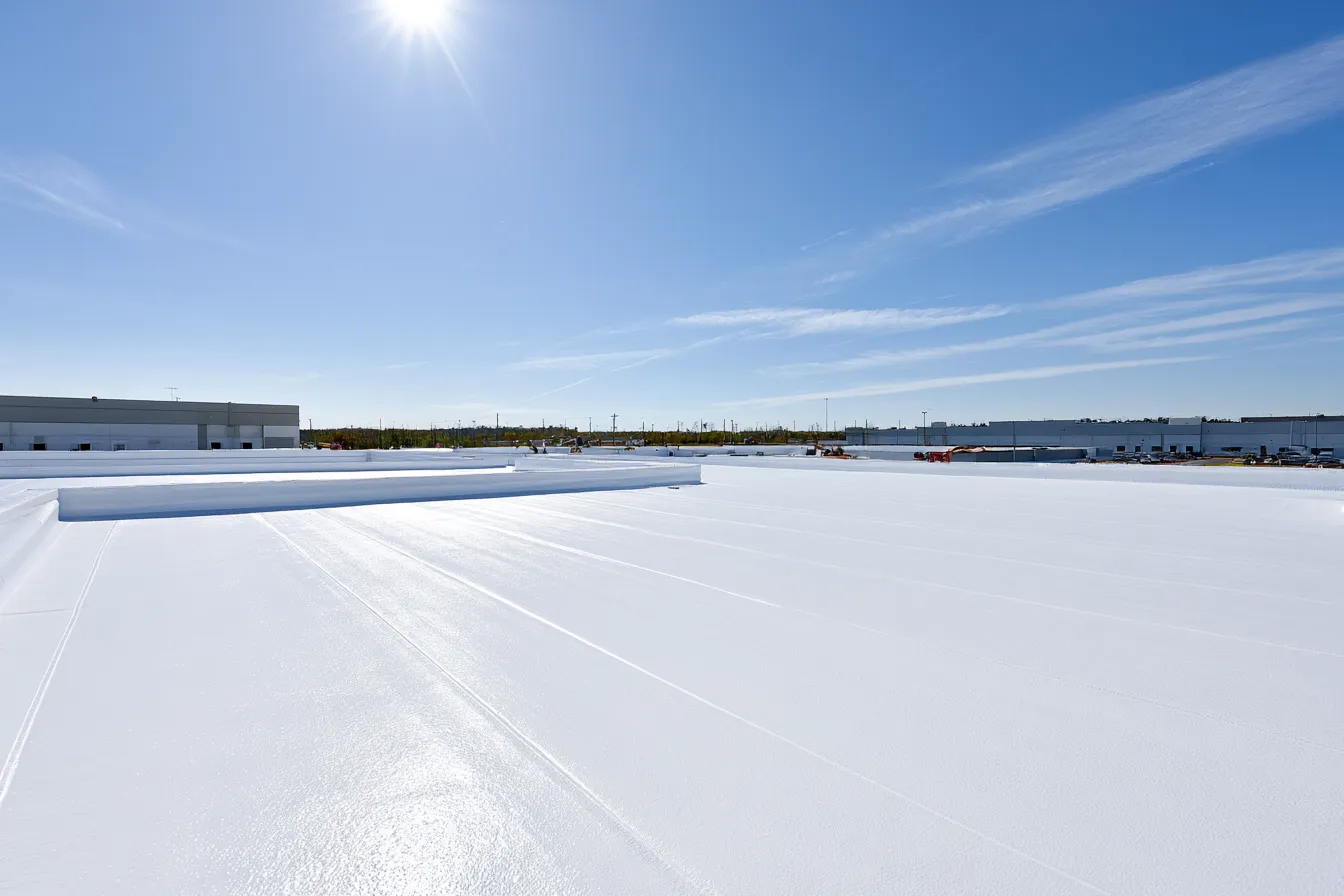
Commercial Roof Coating in Grapevine, TX
A coating extends a sound deck and does nothing for a saturated one. The condition of the deck separates coating from replacement.
Roof coatings for Grapevine commercial buildings
A roof coating is a fluid layer, usually silicone or acrylic, rolled or sprayed over the roof already up there. It reseals the surface, reflects sun and carries coverage of its own. It renews an assembly rather than replacing one.
So the tests come first, not after the work is booked. Where a roof qualifies the case is genuinely good. Where it does not, flat roof repair or replacement is the answer, and a roofer should say so on the day.
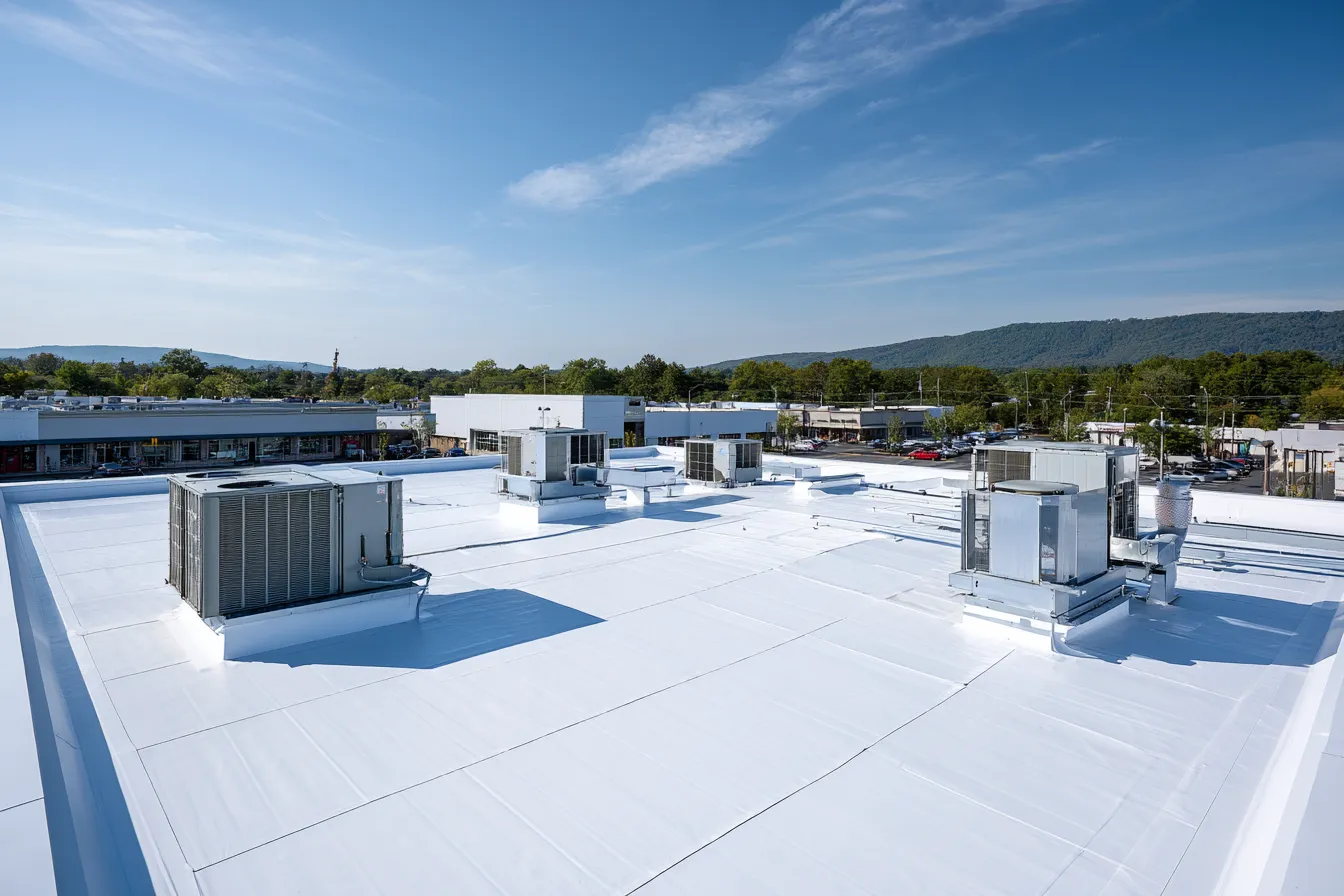
What a roof coating job covers
Most of a coating job happens before any coating opens. That preparation is what makes it hold.
Ask what thickness is specified and how it will be checked. That single question separates a coating system from a coat of paint.
Moisture check and a test patch
The insulation is checked for trapped water and a sample of the coating is applied, cured and pulled to see whether it bonds to this surface. What's visible from below is a small patch of coating left curing in one corner of the roof while the rest of the surface sits untouched.
Washed back to a sound surface
Dirt, chalk and the residue left by standing water come off first, because those are what a coating peels away from. Trapped moisture under a fresh coating has nowhere to go.
Repairs done as repairs
Open seams, failed flashings and wet sections are fixed to the standard they would get if no coating were coming. The coating that eventually goes over those repairs ends up sealing a sound roof instead of hiding a damaged one.
Fabric at the moving details
Seams, curbs, drains and the roof-to-wall joints get reinforcing fabric or tape embedded in the coating. Skipping the fabric and just rolling on a heavier coat looks identical at handoff, until the first hard freeze or gust finds the crack it couldn't bridge.
Primer only where it is needed
Some membranes and metals need a primer before a coating will bond and some do not. A weathered, chalky membrane usually needs it; a clean metal surface with good adhesion in the test patch often doesn't.
Thickness measured as it goes on
Coating is specified in mils of dry film, a mil being a thousandth of an inch. Go thin in the name of stretching a batch further and the coating wears through at the seams and high-traffic spots long before its normal service life is up.
What a roof has to be for a coating to work
This list is short on purpose. A roof clears all of it or it is not a candidate.
- The insulation is dry. A probe, a core or a moisture scan finds no meaningful trapped water.
- The surface takes a test patch.
- The water leaves. Low spots clear within a day or two of rain.
- The details can be rebuilt. Seams, flashings and curbs have to be repairable and reinforceable first.
- Nothing is already stacked underneath. A coating inherits every layer below it.
- The deck is solid underfoot. Soft or springy areas mean the structural surface under the roof has taken water.
All six, and a coating is a real option.
How a roof coating goes on in Grapevine
A coating job can end at stage one. What follows only happens on a roof that is dry and sound.
Test before quoting
Moisture survey and an adhesion patch, and either can stop it.
Repairs and drainage first
Failed seams, flashings and low spots corrected before any coating opens.
Clean, dry, prime
Washed back, given time to dry, primed only where the test says.
Coat, then measure
Fabric at the details, then dry film thickness checked as it goes.
Silicone, acrylic and the trade-offs
The choice between them turns on how your roof handles water. The third answer is no coating.
Silicone
Holds up under standing water and hard sun, which makes it the pick on a roof with low spots that never fully clear. It collects dirt as it ages and gives back some of its reflectivity, and any recoat later has to be silicone again.
Acrylic
A water based coating that goes on for less, stays bright and recoats easily when the time comes. Standing water breaks it down, so it belongs on a roof that clears within a day or two of rain.
No coating
Where the insulation is wet or the surface will not bond, the right specification is not a coating at all but a repair or a replacement. Saying that out loud is the difference between restoring a roof and paying for a finish.
Coverage terms vary by product, by the thickness it went on at and by who applied it, so ask which program this roof would qualify for rather than for a number in conversation.
What the roofer confirms before coating
Three checks stand between a restoration and an expensive mistake. Each one is answered on the roof.
Whether the insulation is dry
The survey result comes back as a plan of the roof with any wet area marked on it. Where there is wet area, the recommendation changes with it.
Whether the coating sticks to this roof
A test patch is applied, cured and pulled, and the result is recorded rather than assumed from the membrane type. Two roofs of the same material do not always take a coating the same way.
How thick it is going on
How many mils the system calls for, and how the applied thickness gets checked, both settled before the first pass. Coverage is the one part of a coating an owner cannot inspect afterwards.
What drives a roof coating price against replacement
A coating is priced by area, by how much repair has to happen in front of it, and by how thick the system goes on. Against a tear-off it is a fraction of the cost, because nothing gets removed or hauled away. That comparison only holds where the roof qualifies. On a roof with wet insulation a coating is not the cheap answer, it is money that buys nothing.
Ask whether your roof qualifies- Roof area, and how much of it needs reinforcing at the details
- How much repair has to be done before any coating opens
- The specified thickness, and therefore how much material
- Silicone or acrylic, decided by how the roof drains
- Whether the drainage itself has to be corrected first
No published range prices a restoration, because the repair in front of it is the variable. Ask for the survey result and the specified thickness on the same page as the figure.
Coating questions Grapevine building owners ask
Most of these come from owners already holding a proposal. The first one settles the rest.
Get your Grapevine roof tested before coating
Say what the building is, what the roof is made of, and whether a coating has already been proposed for it. The result may well be that this roof should not be coated, and that counts as a finished answer here, not a dead end.
Call today(817) 442-2362