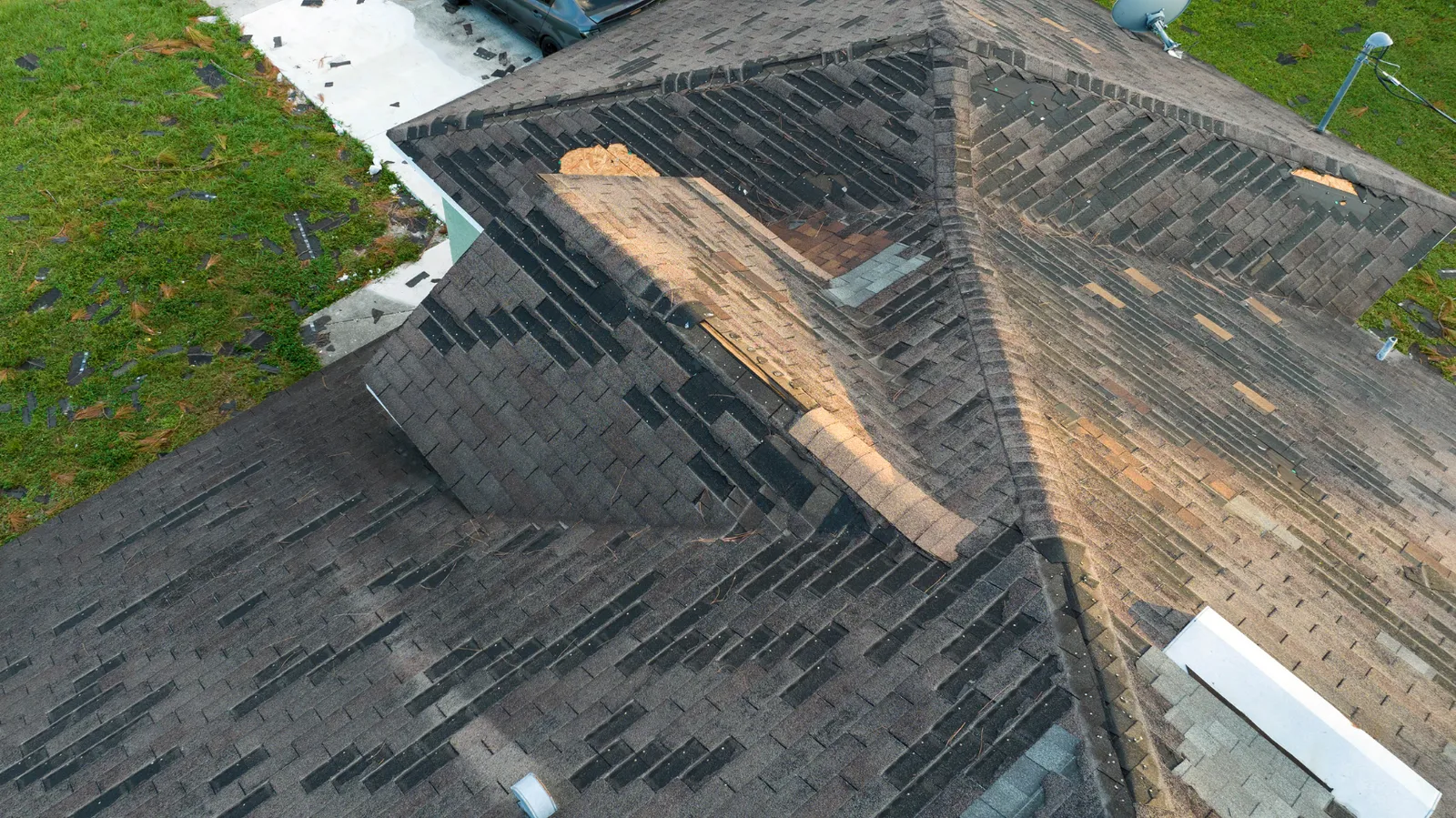
You are three estimates in, each one naming a different shingle, and all three sound like the right answer. The names are not what separates them. What separates them is which kind of weather the roof was put together to survive, and Grapevine gets two kinds.
Hail and wind break a shingle two different ways
Hail is impact. A stone around an inch across, which is where damage to asphalt usually begins, bruises the mat under the granules and knocks the surface loose. That is a property of the shingle itself: how tough the mat is, and whether it was built to take a hit.
Wind is not impact at all. It gets under the bottom edge of a shingle, breaks the strip of adhesive holding it down, and lifts it until the tab creases or tears away. Almost none of that is about the shingle. It is about the nails, where they went, how many there were, and whether the sealant ever bonded in the first place.
What Grapevine's own weather argues for
Four wind reports carry this town's name in the last three years, running from 68 to 77 miles an hour, against one hail report at an inch. Across Tarrant County the balance flips: 33 hail days and 230 reports over the same stretch, 195 of them an inch or bigger, though the biggest stones came down in other towns.
Grapevine gets both and its own record leans wind. In practice that means the nailing and the sealing deserve more attention than they usually get, and impact rating is worth pricing as a real option instead of assuming it in or out. Ask for it as its own line on the estimate and see what the difference actually comes to.
The question to put to your insurer first
Some carriers give a premium credit for an impact-rated roof and some do not, and where one exists the size of it varies a lot. That credit, when there is one, is often what decides whether the upgrade pays for itself before the roof is done.
That is a call to your own insurer. Nobody else can answer it for you, and it is worth settling before you pick rather than after. The shingle guide lays out the grades and what each one is for.
The part of the estimate that decides more than the shingle
The shingle name is the least useful line on an estimate. What decides the outcome sits under it and around it: the underlayment over the deck, the metal in the valleys, the nailing pattern, the ridge, and the intake at the eaves that lets the attic breathe. Two roofers can put the same bundle on the same house and end up with roofs that fail twenty years apart.
Plenty of roofs here do not need any of this settled yet, and if yours is one of them, that is a good afternoon's news. If you would rather decide against your own roof than against three brochures, send Grapevine Roofworks the address and a local roofer will measure it and put the grades it can carry next to their prices. Asphalt shingle roofing and metal roofing cover the two ends of that trade-off.
Impact rating and wind fastening are separate choices, and your deck and pitch decide what will carry. Send the address and a local roofer measures before you pick.
Get the roof measured